
Jyotisha and Traditional Indian Thought: Understanding Macrocosm & Microcosm
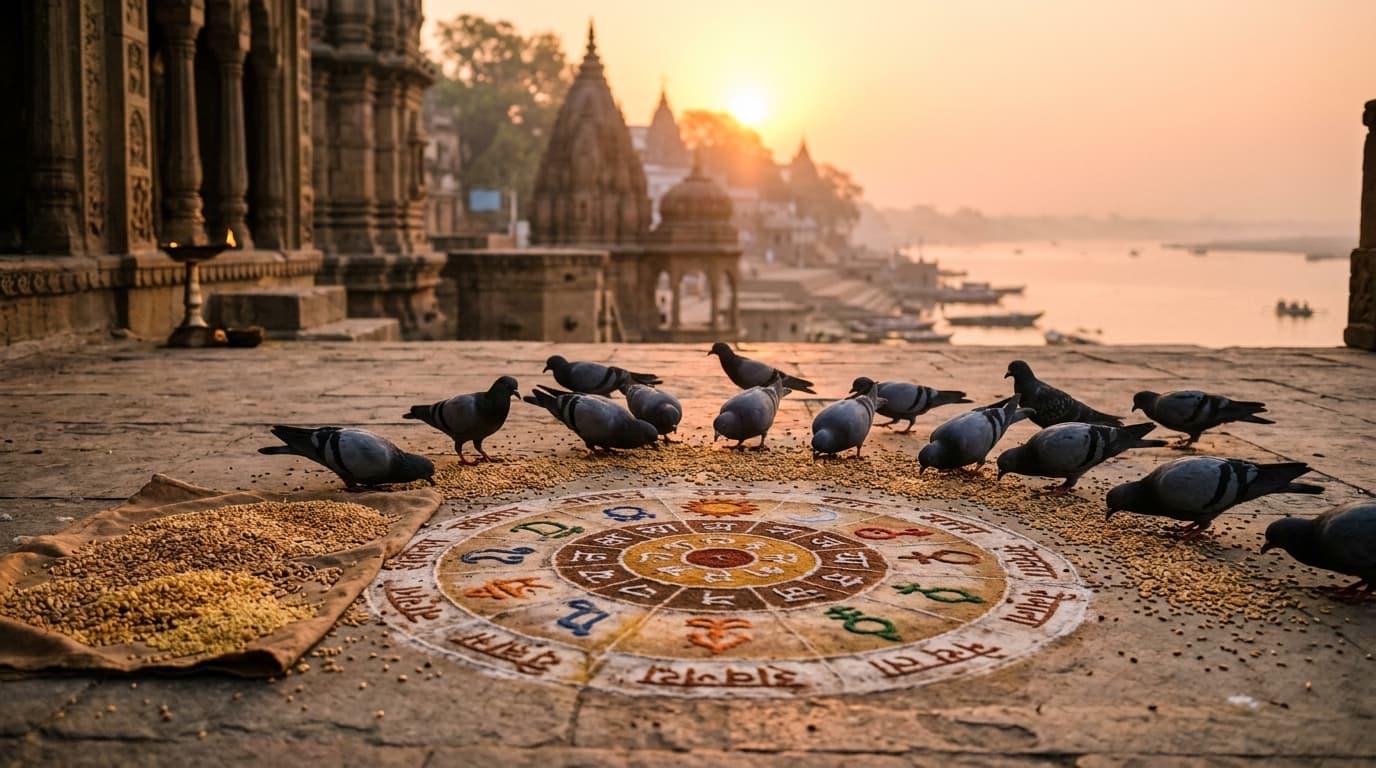
- "As is the individual (Pinda), so is the universe (Brahmanda)."
- Traditional Jyotisha uses planetary names to describe universal energies operating within nature.
- Caring for living creatures harmonizes a person's relationship with the natural elements.
At the heart of traditional Indian worldview lies the principle of **cosmic resonance**: the understanding that individual human life is an intimate reflection of the surrounding universe.
The Principle of Macrocosm and Microcosm
In Vedic thought, the outer cosmos (*Brahmanda*) and inner human consciousness (*Pinda*) are governed by the same elemental laws. * **Surya (Sun)** represents the inner fire of willpower and vitality. * **Budha (Mercury)** represents analytical intellect and speech. * **Shani (Saturn)** represents perseverance, humility, and patience.
When traditional practitioners associated certain acts of service (like feeding birds or caring for cows) with cosmic energies, it was understood as a symbolic exercise in cultivating corresponding inner virtues.
Read [Why Different Traditions Associate Seva With Different Grahas](/blogs/why-different-traditions-associate-seva-with-different-grahas) or view [JEEVA Daily Seva Plans](/plans).
📜 VERIFIED SCRIPTURAL / FACTUAL SOURCES
- Yajurveda Commentaries
- Classical Philosophical Treatises
Frequently Asked Questions (FAQ)
Q: What does "Yatha Pinde Tatha Brahmande" mean?
It is a Sanskrit aphorism meaning "As is the microcosm (individual body/mind), so is the macrocosm (universe)." Human life reflects universal patterns.
Turn Compassion into Daily Action
Register your sacred sankalp today. Our ground coordinators will execute your daily bird feeding and fresh water seva with 100% photo & video transparency.
SEVA SHURU KAREIN