
What Is Pakshi Seva? The Traditional Practice & Importance of Feeding Birds
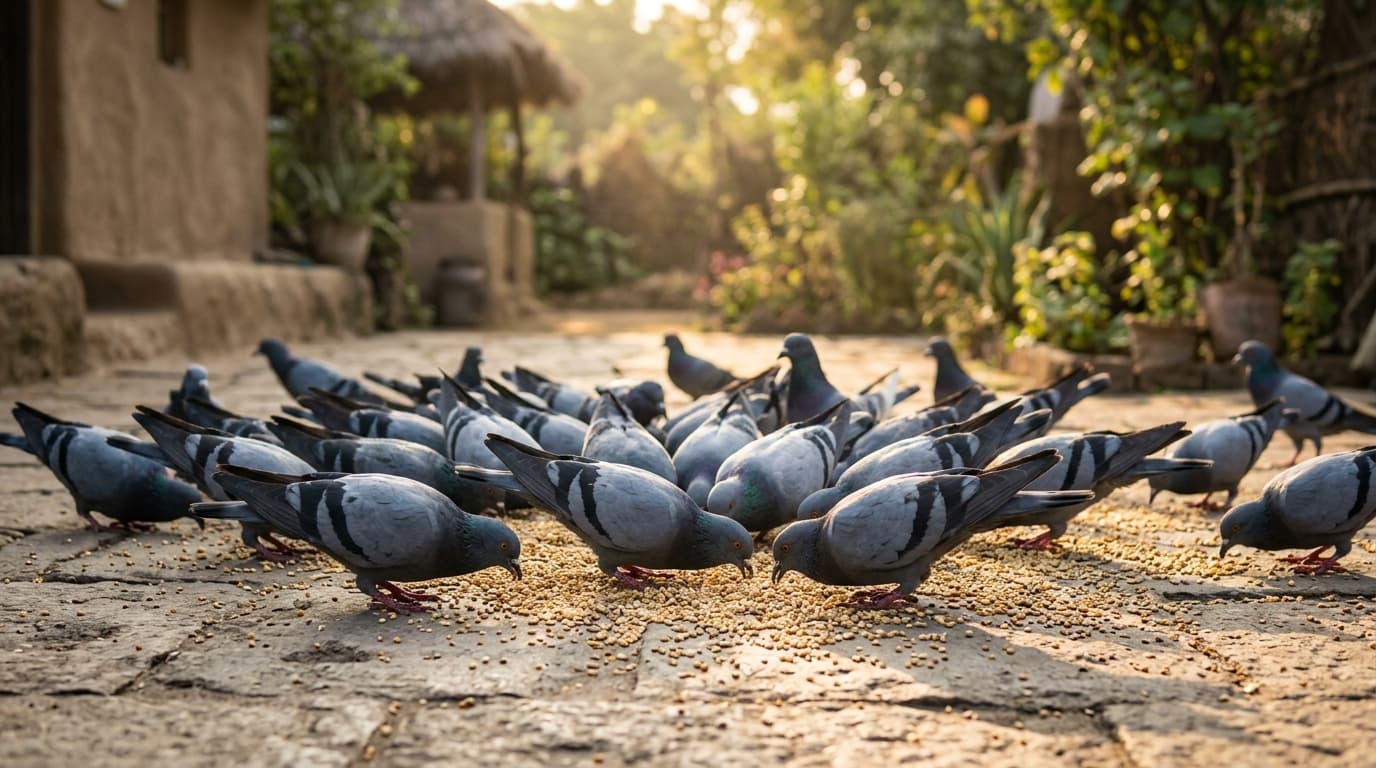
- Pakshi Seva translates directly to "service unto birds."
- It is practiced across Indian states through community feeding towers (Chabutras) and home balconies.
- Provides essential supplemental nutrition to urban pigeons, sparrows, and doves facing habitat loss.
- JEEVA standardizes Pakshi Seva using clean Desi grains and earthen water bowls.
**Pakshi Seva** (पक्षी सेवा) is one of India's oldest and most enduring traditions of wildlife co-existence. Across villages, towns, and historic cities, scatterings of golden grain at dawn have welcomed flocks of birds for centuries.
Historical & Cultural Background
Historically, Indian architecture integrated bird feeding into civic design: * **Chabutras**: Elevated octagonal towers constructed in Gujarat and Rajasthan specifically designed for birds to rest, feed, and nest safe from ground predators. * **Courtyard Platforms**: Traditional homes featured mud platforms (*Angan*) where women scattered morning grains before cooking breakfast.
Why Pakshi Seva Is Vital Today
Modern glass-and-concrete architecture has eliminated traditional nesting crevices and natural seed-bearing plants. Pakshi Seva provides vital supplemental nutrition that keeps urban bird populations stable.
Learn about [What Grains Are Suitable for Birds](/blogs/what-grains-are-suitable-for-common-birds-grain-guide) or view [JEEVA Pakshi Seva Plans](/plans).
📜 VERIFIED SCRIPTURAL / FACTUAL SOURCES
- Indian Ethno-Ornithology
- Traditional Household Customs
Frequently Asked Questions (FAQ)
Q: Which bird species benefit most from Pakshi Seva in Indian cities?
Blue Rock Pigeons, House Sparrows, Laughing Doves, Spotted Doves, and Mynahs are the primary urban species that visit morning feeding spots.
Turn Compassion into Daily Action
Register your sacred sankalp today. Our ground coordinators will execute your daily bird feeding and fresh water seva with 100% photo & video transparency.
SEVA SHURU KAREIN