
Daya, Karuna and Ahimsa: The Three Pillars of Universal Compassion
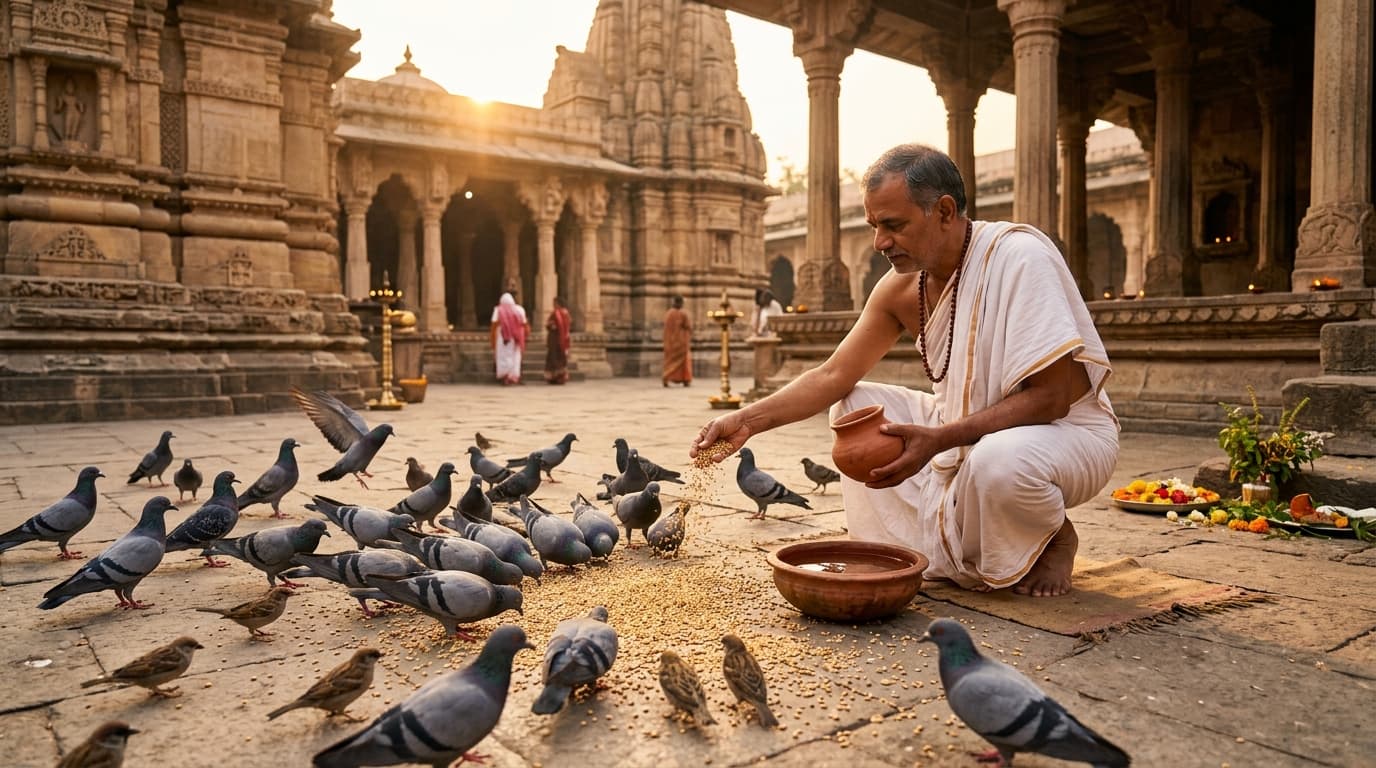
- Ahimsa is the baseline restraint—refraining from physical, verbal, or mental harm.
- Daya is the emotional resonance—feeling sympathy when witnessing suffering.
- Karuna is the active expression—taking practical steps to relieve that suffering.
- Pakshi Seva and Gau Seva integrate all three virtues into a single morning habit.
Classical Indian philosophical systems do not treat ethical virtues as abstract ideals. They provide precise definitions for how inner attitudes translate into outer behavior. **Daya**, **Karuna**, and **Ahimsa** are the three interlocking pillars of universal compassion.
Philosophical Breakdown of the Three Pillars
1. Ahimsa (अहिंसा) — Non-Harm Found as the first *Yama* in the **Patanjali Yoga Sutras (2.30)**, Ahimsa is the conscious commitment not to inflict injury upon any living entity by body, speech, or mind. It creates the safe boundary of moral life.
2. Daya (दया) — Emotional Empathy *Daya* is the soft state of heart that feels another creature's suffering as one's own. It removes the barrier of ego (*Ahamkara*) between the self and the external world.
3. Karuna (करुणा) — Active Service *Karuna* is empathy in motion. It is the refusal to remain passive. When a person sees a thirsty bird in the noon heat and physically fills an earthen bowl with water, *Daya* matures into *Karuna*.
Scriptural Synthesis in Daily Action
In **Padma Purana**, it is stated that a person who practices Ahimsa, feels Daya, and executes Karuna daily attains true peace of mind (*Chitta Shuddhi*).
Discover how [Pakshi Seva Transforms Compassion Into Daily Action](/blogs/pakshi-seva-and-universal-compassion-karuna-in-action) or explore [JEEVA Seva Plans](/plans).
📜 VERIFIED SCRIPTURAL / FACTUAL SOURCES
- Patanjali Yoga Sutras (2.30)
- Padma Purana
- Tirukkural
Frequently Asked Questions (FAQ)
Q: How does Patanjali Yoga Sutra view Ahimsa?
Patanjali lists Ahimsa as the very first Yama (ethical restraint) in Yoga Sutra (2.30), stating that all spiritual practice must rest on a foundation of non-violence.
Turn Compassion into Daily Action
Register your sacred sankalp today. Our ground coordinators will execute your daily bird feeding and fresh water seva with 100% photo & video transparency.
SEVA SHURU KAREIN