What Hindu Scriptures Teach About Compassion Toward Living Beings
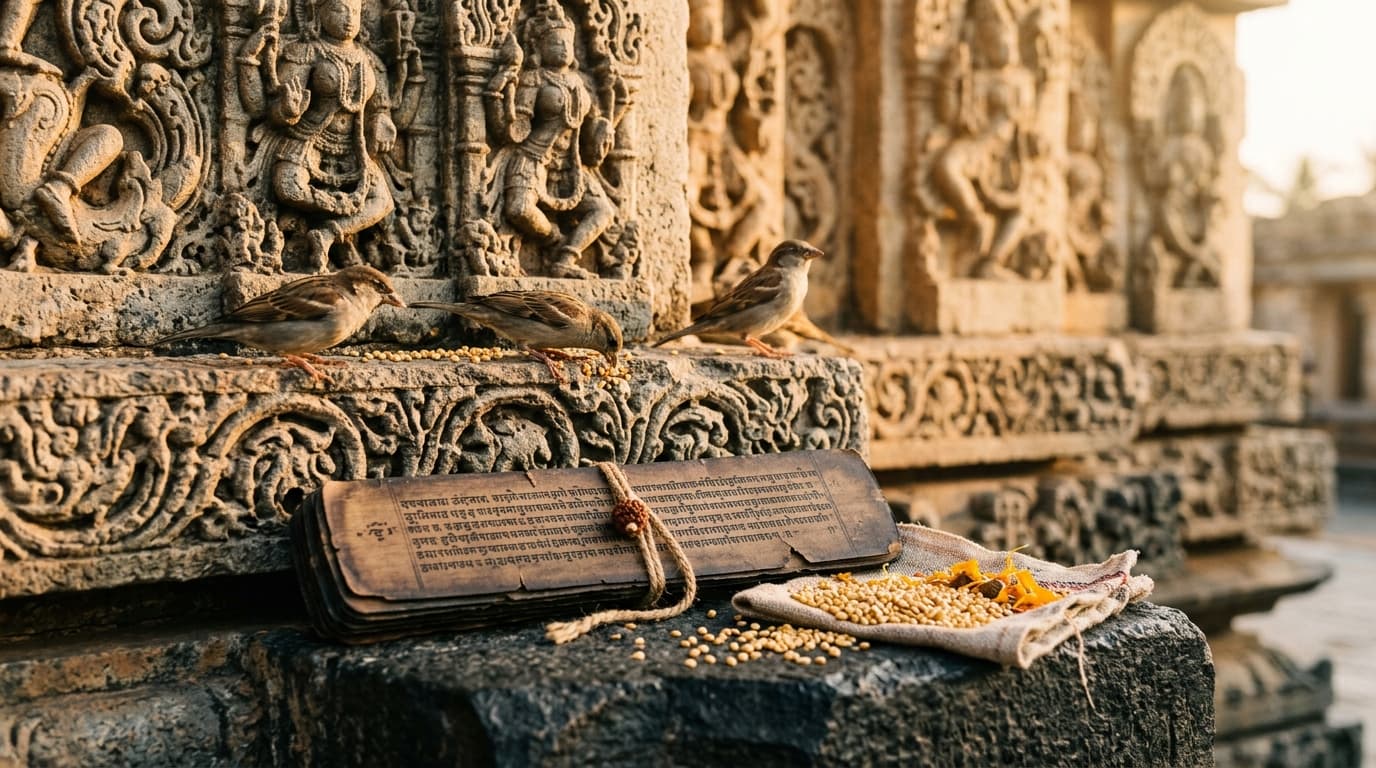
From Rigveda to classical Puranas, Indian scriptures consistently affirm that human stewardship of nature requires protecting and feeding animals and birds.
Authoritative knowledge hub on Pakshi Seva, Bhuta Yajna, Pancha Maha Yajna, Gau Seva, traditional Jyotisha symbolism, and practical spiritual discipline.

From Rigveda to classical Puranas, Indian scriptures consistently affirm that human stewardship of nature requires protecting and feeding animals and birds.

While often translated simply as "compassion", Daya, Karuna, and Ahimsa represent three distinct, sequential stages of spiritual maturity in Indian philosophy.

True Seva is defined as action performed without ego, attachment, or expectation of reward—the essence of Karma Yoga taught in the Bhagavad Gita.

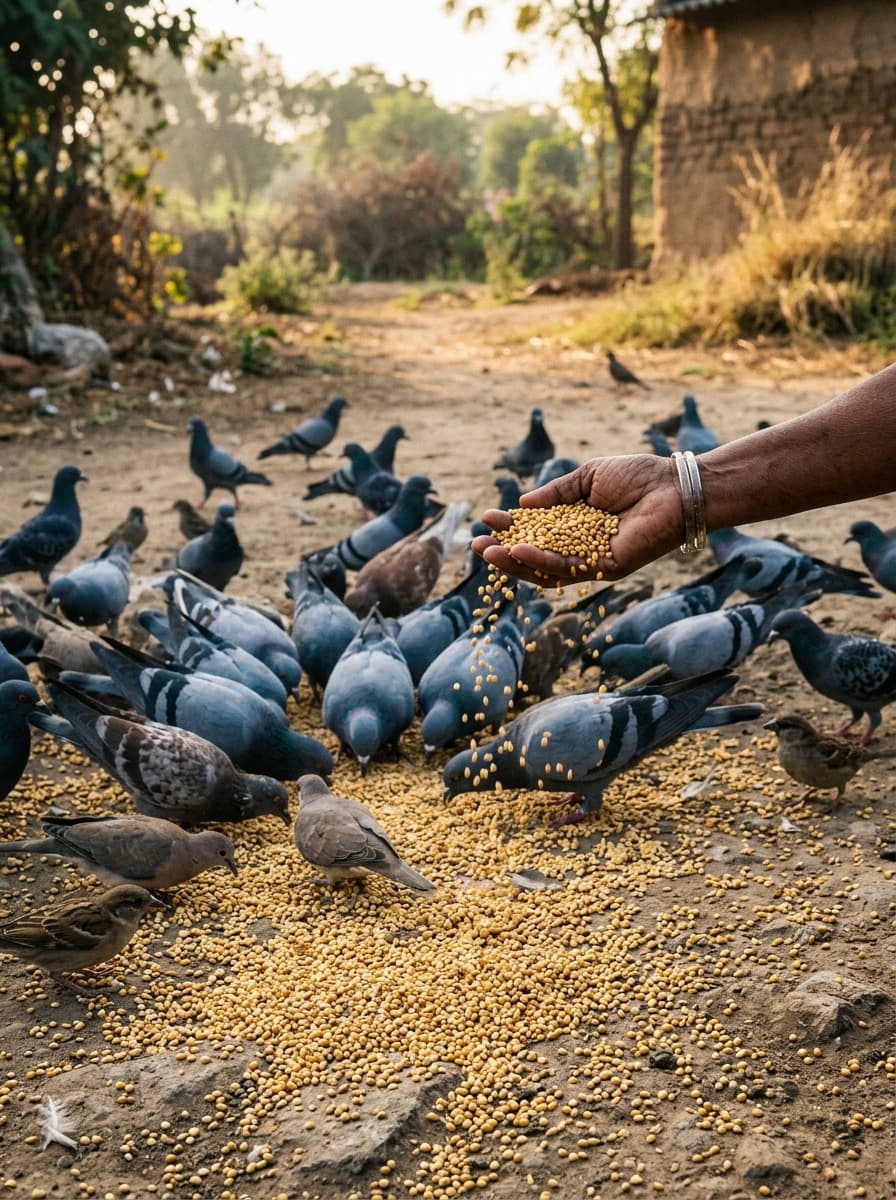
Offering food (Anna) and water (Jala) to thirsty and hungry creatures is considered among the most direct and purifying acts of selfless service in Indian culture.

Mahabharata declares "Bhūtānāṁ dayā paramo dharmaḥ"—compassion toward all living beings is the supreme ethical duty of humankind.

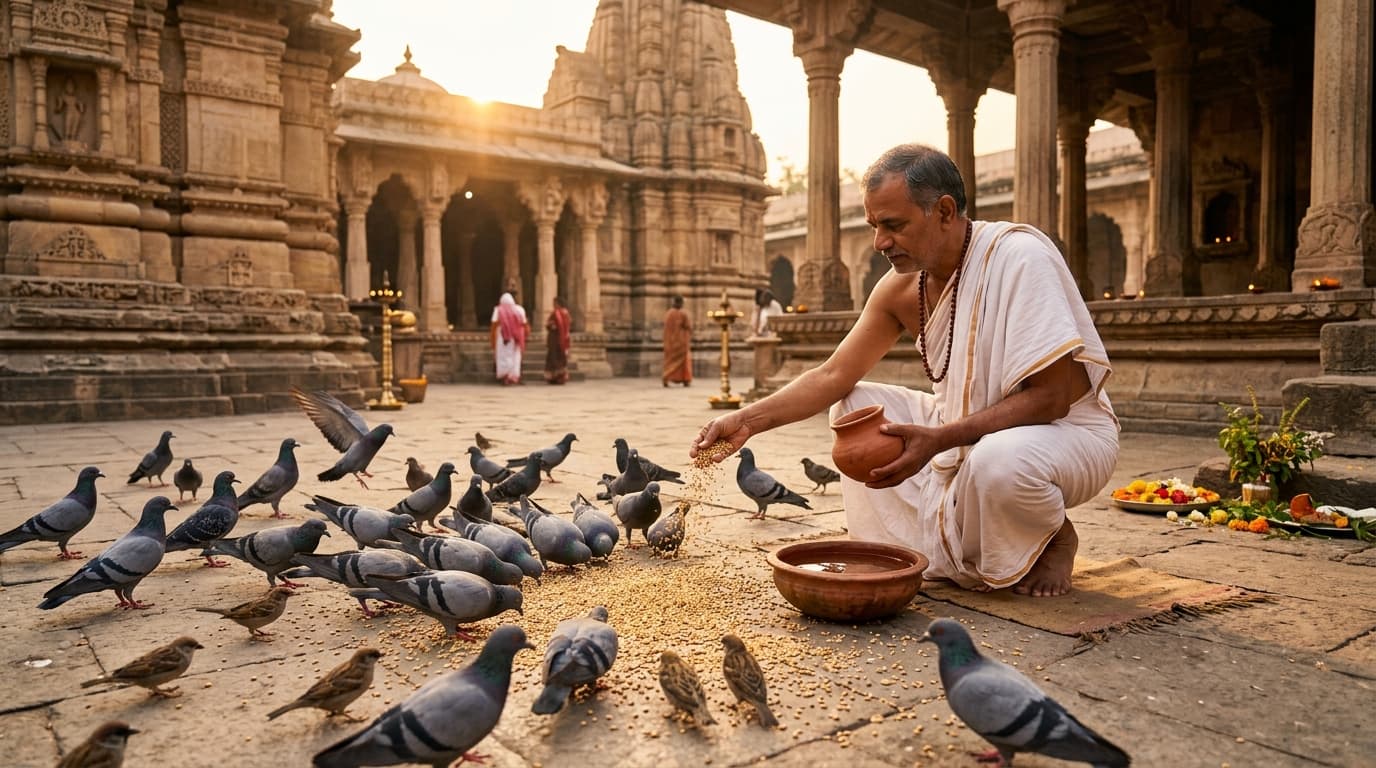
Pakshi Seva is far more than a casual hobby; it is a scripturally rooted practice of Samadarshana—recognizing the same divine spirit present in birds as in all beings.

The Pancha Maha Yajnas are five daily practices designed in Vedic tradition to neutralize accidental harm caused in household life and cultivate cosmic interconnectedness.

Bhuta Yajna is the fourth of the Pancha Maha Yajnas in Sanatana Dharma—a daily duty for householders to offer food, care, and compassion to birds, animals, and all living creatures.