
Compassion for Living Beings in Hindu Dharma: Daya, Karuna & Ahimsa
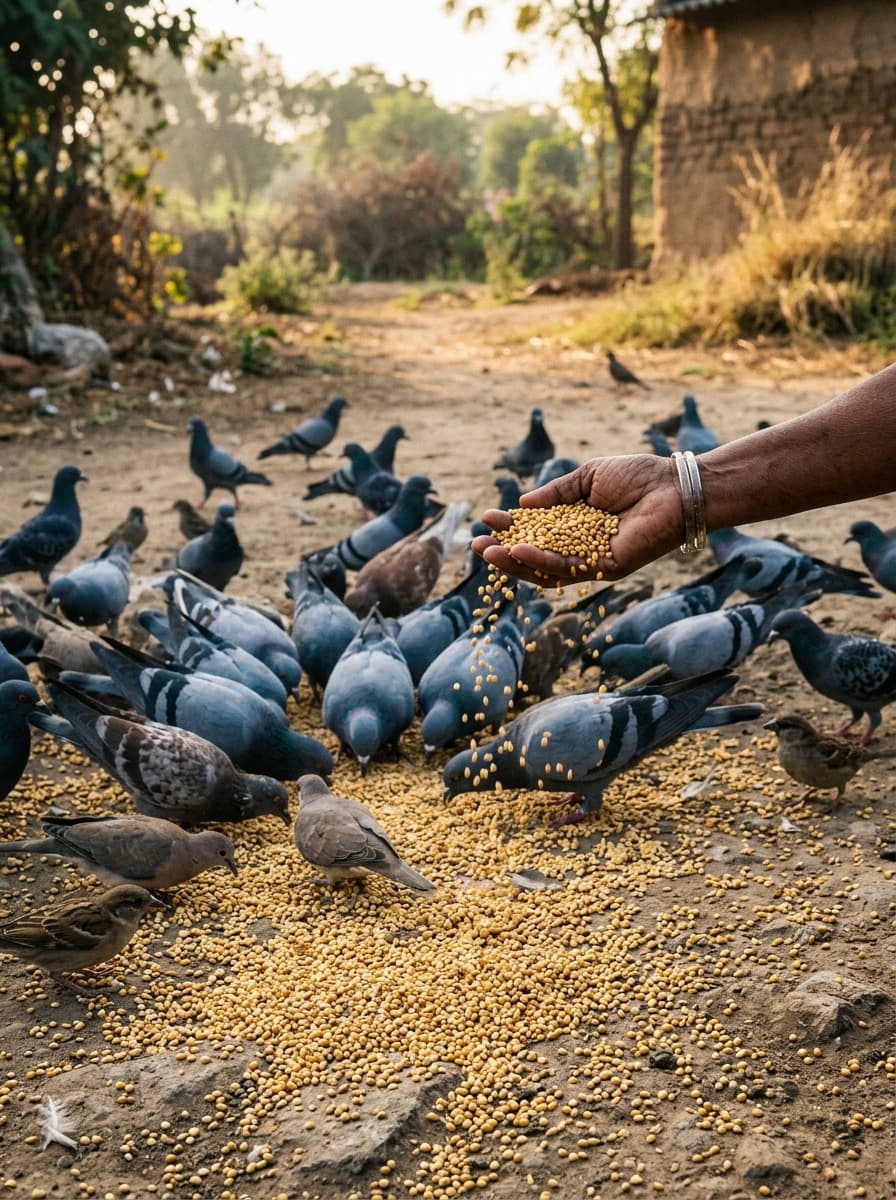
- Mahabharata states that compassion to all creatures (Daya) is superior to ritualistic sacrifices.
- Bhagavata Purana teaches that householders should treat animals and birds with the same protection as their own children.
- True Ahimsa is active; it includes feeding the hungry and supplying clean water to voiceless animals.
- Practicing daily compassion refines human character and removes selfishness.
Central to the spiritual ethos of Sanatana Dharma is the doctrine that moral progress is measured by how a society treats its most vulnerable creatures. Birds and animals, lacking human speech, represent the purest test of human compassion (*Daya*).
Scriptural Citations on Compassion
1. Mahabharata (Anushasana Parva 116.25) In the celebrated discourse between Bhishma and Yudhishthira, Bhishma declares: > **अहिंसा परमो धर्मः तथाहिंसा परं तपः। भूतानां दया परमो धर्मः॥** > *Ahiṁsā paramo dharmaḥ tathāhiṁsā paraṁ tapaḥ | Bhūtānāṁ dayā paramo dharmaḥ* > **Translation**: "Non-violence is the supreme virtue; non-violence is the supreme austerity. Compassion toward all living beings is the supreme Dharma."
2. Shrimad Bhagavata Purana (Canto 7, Chapter 14, Verse 9) > **मृगोष्ट्रखरमर्काखुसरीसृप्खगमक्षिकाः। आत्मनः पुत्रवत् पश्येत् तैरेषामन्तरं कियत्॥** > **Translation**: "Deer, camels, donkeys, monkeys, mice, reptiles, birds, and flies—one should look upon these creatures as one's own children; for how little difference is there between them and ourselves?"
The Three Virtues: Daya, Karuna, and Ahimsa
- **Daya (Compassion)**: The natural impulse of empathy when seeing another creature's hunger, thirst, or distress.
- **Karuna (Active Mercy)**: Translating emotional empathy into immediate tangible action—such as scattering grains or filling clay water bowls.
- **Ahimsa (Non-injury)**: Refraining from harm in thought, word, and deed, while actively fostering an environment where non-human life thrives.
Connecting Ancient Wisdom to Modern Practice
In crowded modern cities, wild birds face severe habitat loss and shortage of uncontaminated water. Practicing daily *Karuna* through structured bird feeding fulfills the mandate of Bhagavata Purana in a clean, systematic manner.
Discover [Our Daily Transparency Reports](/transparency) or read about [Daya, Karuna and Ahimsa](/blogs/daya-karuna-ahimsa-core-virtues-of-dharma).
📜 VERIFIED SCRIPTURAL / FACTUAL SOURCES
- Mahabharata Anushasana Parva (116.25)
- Bhagavata Purana (7.14.9)
- Padma Purana
Frequently Asked Questions (FAQ)
Q: What is the famous Mahabharata verse on compassion?
Mahabharata Anushasana Parva (116.25): "भूतानां दया परमो धर्मः" (Bhūtānāṁ dayā paramo dharmaḥ)—Compassion toward all living beings is the supreme Dharma.
Turn Compassion into Daily Action
Register your sacred sankalp today. Our ground coordinators will execute your daily bird feeding and fresh water seva with 100% photo & video transparency.
SEVA SHURU KAREIN