
Pancha Maha Yajna Explained: The 5 Daily Sacred Duties of Household Life
- Manusmriti (3.68) notes that householders unintentionally cause harm to minor insects and plants through daily activities like cooking, sweeping, and grinding.
- The Pancha Maha Yajnas were instituted as daily acts of restitution, gratitude, and spiritual purification.
- Bhuta Yajna specifically addresses our duty toward the animal kingdom and non-human life.
- Practicing even one Yajna consistently restores personal peace and alignment with Dharma.
In the Vedic worldview, human existence is not isolated; it is deeply interconnected with cosmic forces, ancestors, fellow humans, and the natural environment. The **Pancha Maha Yajna** (Five Great Sacrifices) represent the classical framework for ethical living.
The Five Daily Obligatory Sacrifices
In **Manusmriti (3.68–71)**, Sage Manu explains that every household contains five "slaughterhouses" (*Pancha Soona*) where small living beings are inadvertently harmed during daily routines: the hearth (*Chulli*), the grindstone (*Peshani*), the broom (*Upaskara*), the mortar-pestle (*Kandani*), and the water pot (*Udakumbha*). To offset this unintentional karmic impact, householders are instructed to perform five daily acts:
1. Brahma Yajna (Sacrifice to Knowledge) Studying, reciting, or reflecting upon sacred wisdom and passing on truth to future generations.
2. Deva Yajna (Sacrifice to Cosmic Powers) Offering prayers, light, or incense to honor the elemental forces (sun, wind, water) that sustain life.
3. Pitri Yajna (Sacrifice to Ancestors) Offering libations of water (*Tarpana*) and heartfelt remembrance to parents and predecessors.
4. Manushya Yajna (Sacrifice to Humanity) Offering hospitality, food, or assistance to guests, strangers, and those in need.
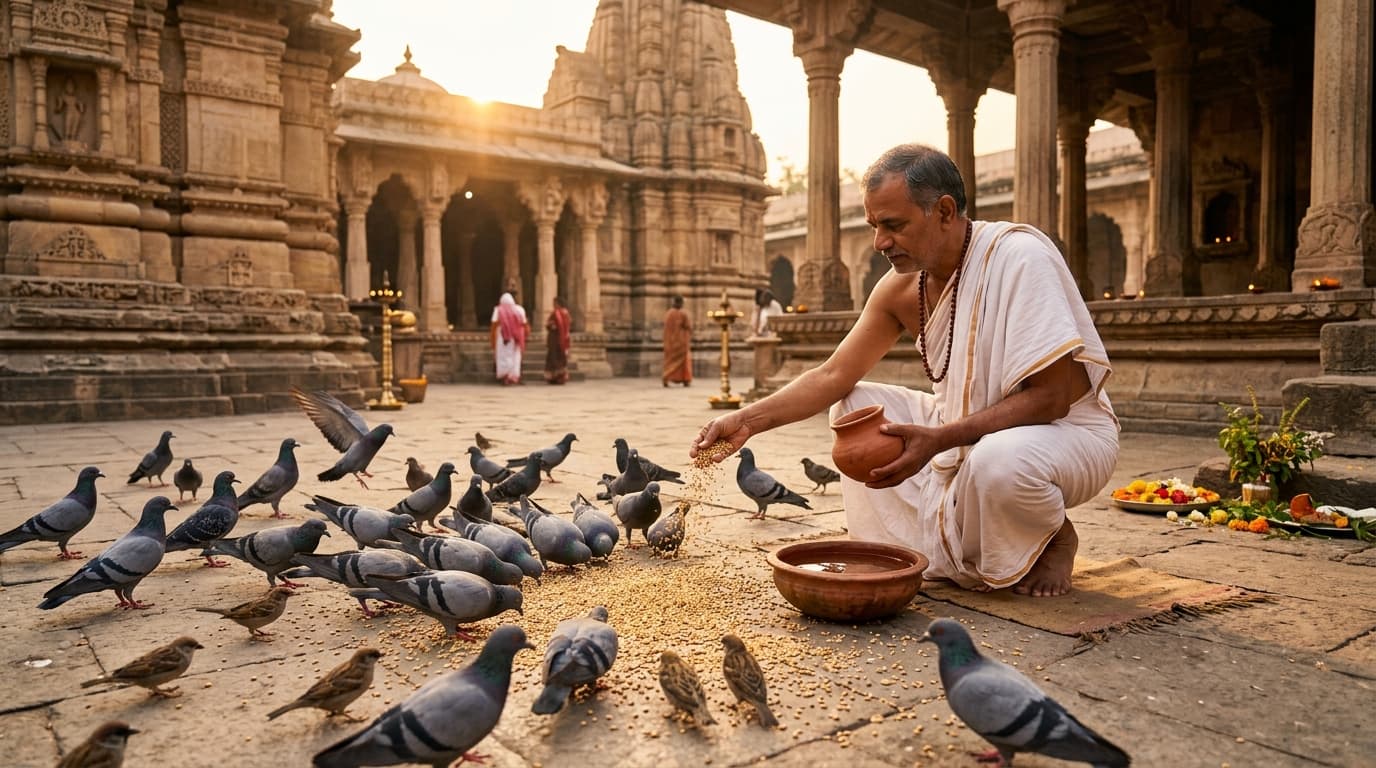
5. Bhuta Yajna (Sacrifice to Living Beings) Placing portioned grains and water outdoors for birds, animals, insects, and wandering creatures.
Practical Integration in Modern Life
While ancient rituals involved complex Vedic fire altars, the core spirit of Pancha Maha Yajna remains practical. Offering fresh grains (*Jowar, Bajra*) to neighborhood birds every morning is the purest modern continuation of Bhuta Yajna.
Read more about [What Is Bhuta Yajna?](/blogs/what-is-bhuta-yajna-pancha-maha-yajna-guide) or view verified [Ground Seva Transparency Logs](/transparency).
📜 VERIFIED SCRIPTURAL / FACTUAL SOURCES
- Manusmriti (3.68-71)
- Shatapatha Brahmana (11.5.6.1-8)
Frequently Asked Questions (FAQ)
Q: Why did ancient Rishis institute Pancha Maha Yajna?
Rishis recognized that domestic life relies on consuming natural resources and clearing space. The 5 Yajnas ensure that humans continuously replenish nature, honor ancestors, serve guests, and nourish animals.
Turn Compassion into Daily Action
Register your sacred sankalp today. Our ground coordinators will execute your daily bird feeding and fresh water seva with 100% photo & video transparency.
SEVA SHURU KAREIN